From Concept to Concrete
“I have underwear older than most of you!” I thought to myself, with bitterness.
“I’m afraid we are full sir.” She said with professional politeness. This was my third attempt at getting a seat, and a free coffee, at the Internationale Tourismus-Börse, Berlin show (ITB). She was correct. The Press Centre was full. But what struck me was that 80% of the available seats at the Press Centre were taken by those under 23 years of age. Later in the day, I did get a seat – and a free coffee. Intrigued, I struck up conversations with my co-coffee drinkers.
The vast majority of those sharing the Press Centre with me were Tick Tokers, “Influencers” and Content Creators. I was eager to share my experiences of my Masters in Travel Journalism course, and to learn from them. Invariably, when I initiated this conversation, they would look at me as if I had farted in a cathedral! It soon became clear to me that their only qualification for being “Travel Writers” was that they could afford to buy an iPhone. And no! I will make no attempt to disguise my disgust and disdain for this discovery. This phenomenon is diluting and dumbing down the noble and demanding discipline of Travel Writing.

I have grown up with the Travel Writing of Mark Twain, Theroux, Dimbleby, Michael Palin and many others like them. These are writers who understood and sought to understand people and places. They produced exquisitely crafted travel narratives without a single thought for the number of likes they would get. That said, I was faced with a dilemma. My righteous and justified indignation did not pay the bills. I realise that I was competing with this new generation of pseudo-journalists for the same gigs and the same fam trips. I have concluded that I need to redefine the playing field. I needed to reinvent the rules to suit ME! I needed to create areas of contribution to the travel ecosystem where Tick Tokers would be lucky if they could eat the dust behind me – and weep!
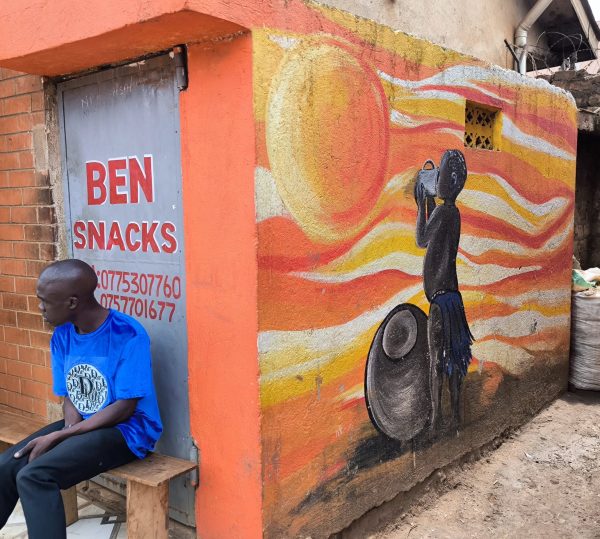
My FMP is “kARTwe – Turning the biggest slum in Uganda into the biggest open-air gallery in the country.” This project is now at a sustainable level of maturity. This article explores what I have learned about myself and how best to position myself in the travel industry. I suggest that my singular contribution, that could make me stand out from the crowd is the ability to work with clients and to move them from “Concept to Concrete.” Embarking on this adventure, there are two clear disciplines to embrace. These are A – Product Development and B – Project Management. These disciplines are non-negotiables for the self-employed Travel Journalist.
Product Development
Product Development is centred on two legs – Design and Demography
Design
Invariably, and especially in high-demand tourist areas, tour operators offer largely identical products and services. What varies is length of trip and level of comfort. The Product Development discipline reviews and analysis the destination and conceptualises A – What can be done differently. B – When can it be done differently? C – Where can it be done differently? D – For Whom can it be done different. Allow me to present two examples. I am currently in advanced discussions with the following tourism boards or tourism companies:
NEPAL
Fully 80% of inbound tourism in this country is directed towards trekking. This product is aimed at the 20-45 year old, European and North American demographic. This paradigm completely ignores the Asian market. It completely ignores the Seniors market. It completely ignores family travel.
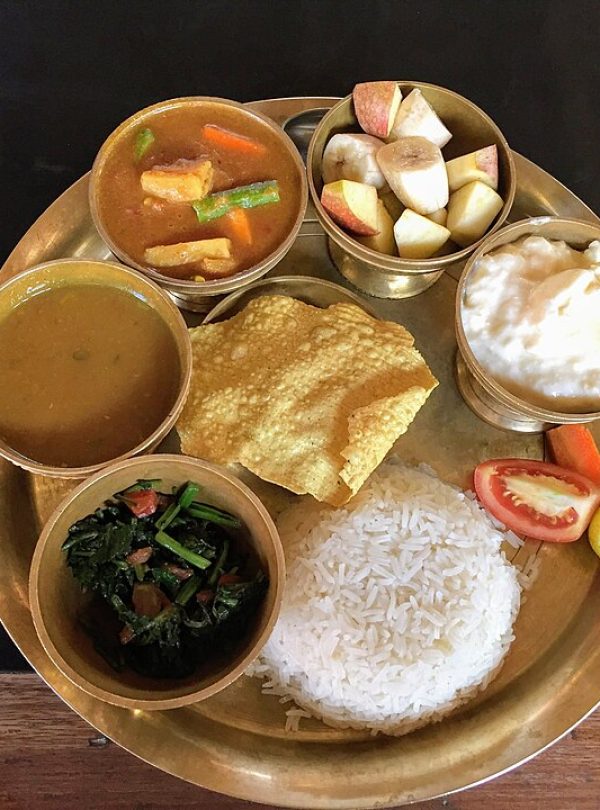
My areas of expertise are anchored in Music, Art and Cuisine. My proposal to the Tourism Board of Nepal is to highlight these areas of Nepalese culture. They are excited about this. They have come back to me and asked if we could develop regenerative tourism by promoting community tourism as well. This product takes the visitor to rural communities where they spend time in these settlements.
The great benefit of this product development is that it diversifies the tourism opportunities by offering new products and new places, outside of Katmandu. Thus, tourism can boost economic development in a wider area of the country. It also addresses many of the Sustainable Development Goals of the UN.
Egypt
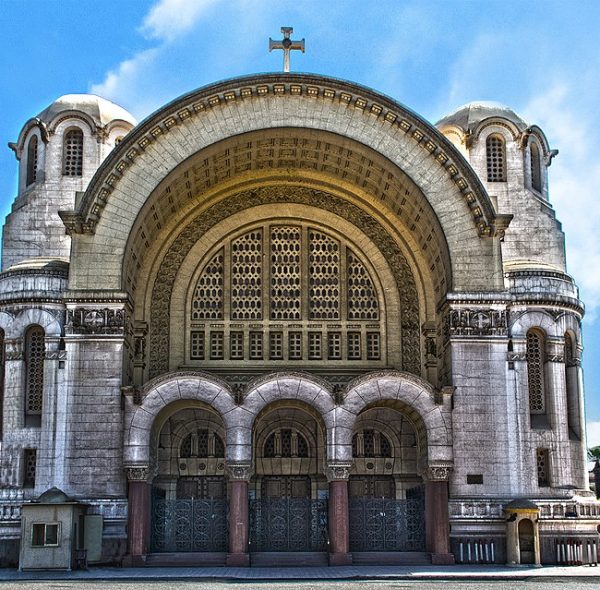
I am in advanced discussions with a tour operator in Cairo. I will develop a new product for them, called Coptic Cairo. Egypt is well known as a Muslim country. However, there is a significant Coptic church presence across the country.
The Coptic Orthodox Church was established by Saint Mark, an apostle and evangelist, during the middle of the 1st century (c. AD 42). Egypt was blessed with a Coptic culture that contained many churches on the route which the holy family crossed to escape and seek refuge from the mad King Herod. The city of Alexandria was the entry point for Christianity. However, the old city of Cairo became the stronghold of many churches and a true example of Christian architecture from the beginning of the 5th century to our current day.
The Muslims and the Copts, largely, live together in peace. The Copts have a distinctive culture and contribution to Egypt. This is evident in their cuisine, art, architecture, music and religion. To my knowledge, there is no product that takes the visitor to this multifaceted country that indulges and educates the traveller on Coptic Cairo. I studied Theology and Philosophy, formally, for 5 and a half years. I believe that I am uniquely positioned to develop this product.
Demography
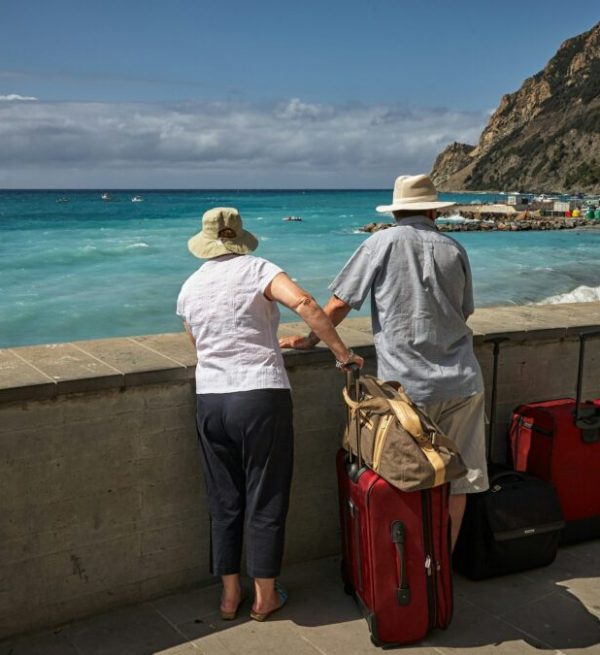
Product Development and demographic targeting are two sides of the same coin. The business reasoning is simple. It answers the questions: What am I selling? Who am I selling it to. My exploration and analysis of the travel ecosystem suggests that the “Grey Dollar” is under-appreciated and underserved.
The “Grey Dollar” refers to people who are retirees or early retirees. The motivation to target this demographic is because:
- They have more disposable income. They will spend more on accommodation, dinning, and excursions. Older consumers, particularly Baby Boomers and the over-50s, hold a disproportionately large share of national wealth and disposable income compared to younger generations. Many have paid off mortgages, built up pensions, and are free from the financial burdens of raising young children. This gives them more money to spend on themselves. They often have stable financial situations and less debt. This makes them a reliable consumer base, especially during uncertain economic times.
- They have stable spending habits. Their spending is less affected by economic fluctuations.
- They have fewer limitations on time. This means that They could easily stay for several additional nights if we give them a good reason to do so. They can travel out of season, thus alleviating low-season cash flow for the tourism company.
Project Management
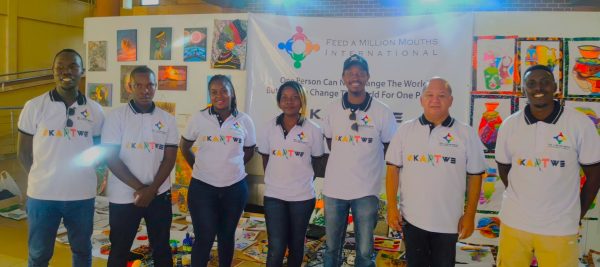
Having a good idea is not enough. Many great ideas have died an untimely death. This is not because the idea was bad. This happens because the Vision Bearer does not know how to implement the idea or does not have the time to implement the idea. The kARTwe Project is live and sustainable because we have succeeded in taking it from Concept to Concrete. To do this, we focused on Upstream activities (I will here build on what I shared in the blog The Team is the Hero) and Downstream activities (I will here build on what I shared in the blog Go Deep! Go Wide!). From an academic perspective, this section describes the FMP methodology.
Upstream – The Team is the Hero.
Read and research. The servant leader must have the humility to learn from others. In the preparation for the kARTwe Project, I read extensively about similar projects. I deal more fully with reference projects in Other Street Art Projects. I met with street artists in many countries. I learnt from them what was viable and what was not.
I met with local leaders to ask them what they thought about the project idea. I incorporated their thinking into the project.
I sat in the dirt, in the slum, talking with ordinary people, of all ages. I explained my ideas to them. Their feedback found a home in the project plan0
Build a team. Very early in life, I discovered that I was not very clever. This didn’t bother me. I have approached life and projects, in a wide range of domains, with a simple yet effective strategy. I am not very clever. But my moderate success is facilitated by surrounding myself with people who really are clever – each in their dedicated domain. I then find ways making them work together for maximum and mutual benefit.
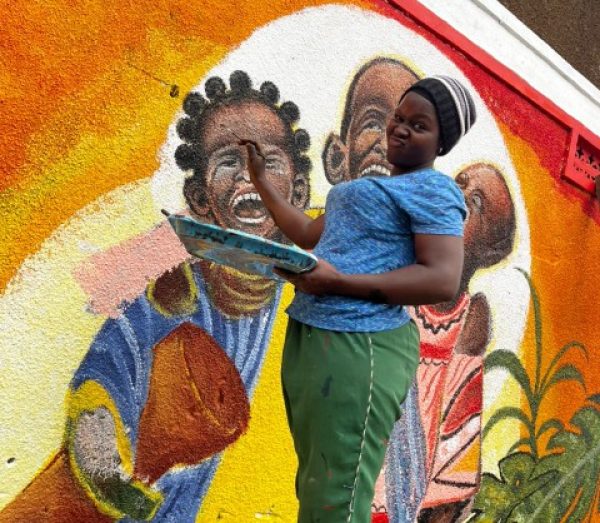
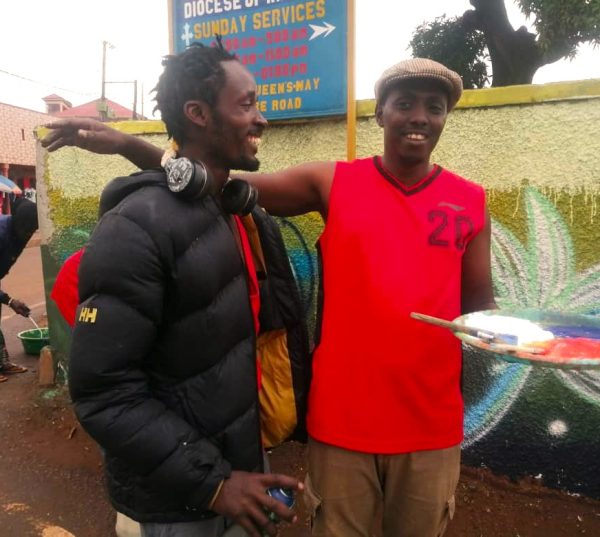
Train the team. Once roles and responsibilities have been defined, we did two things – We created written role descriptions for each person on the team. Secondly, we identified what additional training and mentoring they would need to achieve their tasks with excellence. Providing the training might seem like a sideways step. It is not, if you take a long term view. This is not our last project. We will have others. By investing in team training, we created project ownership and additional leadership and operational capacity for future projects.
Release the team. Once the team was trained and clearly briefed on deliverables and timelines we “release them.” Their instructions are to “get the job done!” We do not micromanage the team. They are free to inject their own style and personality into their roles.
Downstream – Go Deep! Go Wide!
I make a distinction between Upstream and Downstream networking and partnerships. Upstream refers to the networking and partnerships that take the project from Concept to Concrete. Downstream networking and partnerships refer to collaboration efforts that take a now active project out of the domain of the project stakeholders and into the domain of a wider audience.
Actions Speak Louder Than Words
- Plascon Kansai Paints.
- Mr Vivian Lyazi, Commissioner for Tourism development, Ministry of Tourism, Wildlife and Antiquities-Uganda
- The Ugandan Tourism.
- Prime Safaris
- Mediterraneao
- Afrigo Band
- Rotaract Uganda
- The Rotary Club of Uganda
A full explanation of how we developed this can be seen in Go Wide! Go Deep!
The market for Travel Journalists is a crowded space. The Travel Journalist, especially Freelancers will not survive by being “one of many.”
We must distinguish ourselves from the Tick Tock generation by delivering value added services and high-quality, fact-checked, multimedia content. We must distinguish ourselves from the Tick Tock generation by delivering value added services and high-quality, fact-checked, multimedia content.
We can best serve our customers by leveraging life experience and virgin thinking. A “Me Too! Me Too!” a paradigm is the gateway to professional suicide for the freelance Travel Journalism. We will distinguish ourselves by focusing on value added services such as Product Development and Demography Leverage.
The freelance Travel Journalist must not only focus on purely on “Likes!” We have the expertise to work with tourism boards, DMCs and tour companies to take there ideas from Concept to Concrete.
One person cannot change the world
but YOU can change the world for one person.